Wednesday, June 27, 2012

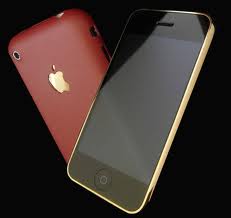
iPhone 11

Almost all input is given through the touch screen, which understands complex gestures using multi-touch. The iPhone's interaction techniques enable the user to move the content up or down by a touch-drag motion of the finger. For example, zooming in and out of web pages and photos is done by placing two fingers on the screen and spreading them farther apart or bringing them closer together, a gesture known as "pinching". Scrolling through a long list or menu is achieved by sliding a finger over the display from bottom to top, or vice versa to go back. In either case, the list moves as if it is pasted on the outer surface of a wheel, slowly decelerating as if affected by friction. In this way, the interface simulates the physics of a real object. Other user-centered interactive effects include horizontally sliding sub-selection, the vertically sliding keyboard and bookmarks menu, and widgets that turn around to allow settings to be configured on the other side. Menu bars are found at the top and bottom of the screen when necessary. Their options vary by program, but always follow a consistent style motif. In menu hierarchies, a "back" button in the top-left corner of the screen displays the name of the parent folder.
Phone
The iPhone allows audio conferencing, call holding, call merging, caller ID, and integration with other cellular network features and iPhone functions. For example, if music is playing when a call is received, the music fades out, and fades back in when the call has ended. The proximity sensor shuts off the screen and touch-sensitive circuitry when the iPhone is brought close to the face, both to save battery and prevent unintentional touches. The iPhone does not support video calling or videoconferencing on versions prior to the fourth generation, as there is only one camera on the opposite side of the screen.The iPhone 4 supports video calling using either the front or back camera over Wi-Fi, a feature Apple calls FaceTime.The first two models only support voice dialing through third-party applications.Voice control, available only on the iPhone 3GS and iPhone 4, allows users to say a contact's name or number and the iPhone will dial.
The iPhone includes a visual voicemail (in some countries) feature allowing users to view a list of current voicemail messages on-screen without having to call into their voicemail. Unlike most other systems, messages can be listened to and deleted in a non-chronological order by choosing any message from an on-screen list.

iPhone 10

Software
The iPhone, iPod Touch and iPad run an operating system known as iOS (formerly iPhone OS). It is a variant of the same Darwin operating system core that is found in Mac OS X. Also included is the "Core Animation" software component from Mac OS X v10.5 Leopard. Together with the PowerVR hardware (and on the iPhone 3GS, OpenGL ES 2.0), it is responsible for the interface's motion graphics. The operating system takes up less than half a gigabyte. It is capable of supporting bundled and future applications from Apple, as well as from third-party developers. Software applications cannot be copied directly from Mac OS X but must be written and compiled specifically for iOS.
Like the iPod, the iPhone is managed with iTunes. The earliest versions of the OS required version 7.3 or later, which is compatible with Mac OS X version 10.4.10 Tiger or later, and 32-bit Windows XP or Vista.The release of iTunes 7.6 expanded this support to include 64-bit versions of XP and Vista,and a workaround has been discovered for previous 64-bit Windows operating systems.Apple provides free updates to the OS for the iPhone through iTunes,and major updates have historically accompanied new models.Such updates often require a newer version of iTunes — for example, the 3.0 update requires iTunes 8.2 — but the iTunes system requirements have stayed the same. Updates include both security patches and new features.For example, iPhone 3G users initially experienced dropped calls until an update was issued.
Interface
The interface is based around the home screen, a graphical list of available applications. iPhone applications normally run one at a time (not including iOS 4, which includes running applications in the background ) , although most functionality is still available when making a call or listening to music. The home screen can be accessed at any time by a hardware button below the screen, closing the open application in the process.By default, the Home screen contains the following icons: Messages (SMS and MMS messaging), Calendar, Photos, Camera, YouTube, Stocks, Maps (Google Maps), Weather, Voice Memos, Notes, Clock, Calculator, Settings, iTunes (store), App Store, and (on the iPhone 3GS and iPhone 4) Compass. Docked at the base of the screen, four icons for Phone, Mail, Safari (Internet), and iPod (multimedia) delineate the iPhone's main purposes.On January 15, 2008, Apple released software update 1.1.3, allowing users to create "Web Clips", home screen icons that resemble apps that open a user-defined page in Safari. After the update, iPhone users can rearrange and place icons on up to nine other adjacent home screens, accessed by a horizontal swipe.Users can also add and delete icons from the dock, which is the same on every home screen. Each home screen holds up to sixteen icons, and the dock holds up to four icons. Users can delete Web Clips and third-party applications at any time, and may select only certain applications for transfer from iTunes. Apple's default programs, however, may not be removed. The 3.0 update adds a system-wide search, known as Spotlight, to the left of the first home screen.

iPhone 9

GSM Models of the iPhone use a SIM card to identify themselves to the GSM network. The SIM sits in a tray, which is inserted into a slot at the top of the device. The SIM tray can be ejected with a paperclip or the "SIM eject tool" (a simple piece of die-cut sheet metal) included with the iPhone 3G and 3GS.In most countries, the iPhone is usually sold with a SIM lock, which prevents the iPhone from being used on a different mobile network.
Liquid contact indicators
The iPhone is equipped with liquid contact indicators which change from white to red in color when they come in contact with water. These suggest whether water damage has affected the device. The indicators on the iPhone include a small disc which is located at the bottom of the headphone jack and with the iPhone 3G and all later models an additional one is located at the bottom of the dock connector.The indicators are often used by Apple employees to determine whether the device qualifies for a warranty repair or replacement. If the indicators show that the device was exposed to water, they may determine that the device is not covered by Apple. However, the liquid contact indicators may be triggered through routine use, and if a device is worn while exercising, the sweat from an owner may dampen the indicators enough to indicate water damage.On many other mobile phones from different manufacturers, the liquid contact indicators are located in a protected location, such as beneath the battery behind a battery cover, but the indicators on an iPhone are directly exposed to the environment. This has led to criticism of the placement of the indicators, which may also be affected by steam in a bathroom or other light environmental moisture.In response to these criticisms, Apple made a silent change to their water damage policy for iPhones and similar products. This new policy allows the customer to request further internal inspection of the phone to verify if internal liquid damage sensors were triggered.
Included items
All iPhone models include written documentation, and a dock connector to USB cable. The original and 3G iPhones also came with a cleaning cloth. The original iPhone included stereo headset (earbuds and a microphone) and a plastic dock to hold the unit upright while charging and syncing. The iPhone 3G includes a similar headset plus a SIM eject tool (the original model requires a paperclip). The iPhone 3GS includes the SIM eject tool and a revised headset, which adds volume buttons (not functional with previous iPhone versions).The iPhone 3G and 3GS are compatible with the same dock, sold separately, but not the original model's dock.All versions include a USB power adapter, or "wall charger," which allows the iPhone to charge from an AC outlet. The iPhone 3G and iPhone 3GS sold in North America, Japan, Colombia, Ecuador, or Peru include an ultracompact USB power adapter.

iPhone 8

Camera
The original iPhone and iPhone 3G feature a built-in Fixed focus 2.0 megapixel camera located on the back for still digital photos. It has no optical zoom, flash or autofocus, and does not support video recording (iPhone 3G does support video recording via 3rd party App available on the App Store), however jailbreaking allows users to do so. Version 2.0 of iPhone OS introduced the capability to embed location data in the pictures, producing geocoded photographs.
The iPhone 3GS has a 3.2 megapixel camera, manufactured by OmniVision, featuring autofocus, auto white balance, and auto macro (up to 10 cm). It is also capable of capturing 640x480 (VGA resolution) video at 30 frames per second,although compared to higher-end CCD based video cameras it does exhibit the rolling shutter effect.The video can then be cropped on the device itself and directly uploaded to YouTube, MobileMe, or other services

The iPhone 4 introduced a 5.0 megapixel camera (2592x1936 pixels), also located on the back, which is equipped with a backside illuminated sensor capable of capturing pictures in low-light conditions, as well as an LED flash capable of staying lit for video recording at 720p resolution, considered high-definition.In addition the iPhone 4 has a second camera on the front capable of VGA photos and SD video recording.
Storage and SIM
The iPhone was initially released with two options for internal storage size: 4 GB or 8 GB. On September 5, 2007, Apple discontinued the 4 GB models.On February 5, 2008, Apple added a 16 GB model.The iPhone 3G was available in 16 GB and 8 GB. The iPhone 3GS came in 16 GB and 32 GB variants and still is available in 8 GB. The iPhone 4 is available in 16 GB and 32 GB variants. All data is stored on the internal flash drive; the iPhone does not support expanded storage through a memory card slot, or the SIM card.

Monday, June 25, 2012

iPhone 7

Battery
Replacing the battery requires opening the iPhone unit and exposing the internal hardware.
The iPhone features an internal rechargeable battery. Like an iPod but unlike most other mobile phones, the battery is not user-replaceable.The iPhone can be charged when connected to a computer for syncing across the included USB to dock connector cable, similar to charging an iPod. Alternatively, a USB to AC adapter (or "wall charger," also included) can be connected to the cable to charge directly from an AC outlet. A number of third-party accessories (car chargers, portable chargers, battery cases, stereo dock chargers, and even solar chargers) are also available.
Apple runs tests on preproduction units to determine battery life. Apple's website says that the battery life "is designed to retain up to 80% of its original capacity after 400 full charge and discharge cycles", which is comparable to iPod batteries.

The battery life of early models of the iPhone has been criticized by several technology journalists as insufficient and less than Apple's claims.This is also reflected by a J. D. Power and Associates customer satisfaction survey, which gave the "battery aspects" of the iPhone 3G its lowest rating of 2 out of 5 stars.
If the battery malfunctions or dies prematurely, the phone can be returned to Apple and replaced for free while still under warranty.The warranty lasts one year from purchase and can be extended to two years with AppleCare. Though the battery replacement service and its pricing was not made known to buyers until the day the product was launched,it is similar to how Apple (and third parties) replace batteries for iPods. The Foundation for Taxpayer and Consumer Rights, a consumer advocate group, has sent a complaint to Apple and AT&T over the fee that consumers have to pay to have the battery replaced.Since July 2007, third-party battery replacement kits have been available at a much lower price than Apple's own battery replacement program. These kits often include a small screwdriver and an instruction leaflet, but as with many newer iPod models the battery in the original iPhone has been soldered in. Therefore a soldering iron is required to install the new battery. The iPhone 3G uses a different battery fitted with a connector that is easier to replace.

The iPhone 4 is the first generation to have two cameras. The LED flash for the rear-facing camera (top) and the forward-facing camera (bottom) are both unique to that model.

Monday, June 13, 2011

iPhone 6

The 3.5 mm TRRS connector for the headphones is located on the top left corner of the device. The headphone socket on the original iPhone is recessed into the casing, making it incompatible with most headsets without the use of an adapter.Subsequent generations eliminated the issue by using a flush-mounted headphone socket. Cars equipped with an auxiliary jack allow for handsfree use of the iPhone while driving as a substitute for Bluetooth.
While the iPhone is compatible with normal headphones, Apple provides a headset with additional functionality. A multipurpose button near the microphone can be used to play or pause music, skip tracks, and answer or end phone calls without touching the iPhone. A small number of third-party headsets specifically designed for the iPhone also include the microphone and control button.The current headsets also provide volume controls, which are only compatible with more recent models.These features are achieved by a fourth ring in the audio jack that carries this extra information.
The built-in Bluetooth 2.x+EDR supports wireless earpieces and headphones, which requires the HSP profile. Stereo audio was added in the 3.0 update for hardware that supports A2DP.While non-sanctioned third-party solutions exist, the iPhone does not officially support the OBEX file transfer protocol. The lack of these profiles prevents iPhone users from exchanging multimedia files, such as pictures, music and videos, with other bluetooth-enabled cell phones.

Composite or component video at up to 576i and stereo audio can be output from the dock connector using an adapter sold by Apple.iPhone 4 also supports 1024x768 VGA output via a dock adapter. The iPhone did not support voice recording until the 3.0 software update.

Monday, May 16, 2011

iPhone 5

The display responds to three sensors (four on the iPhone 4). A proximity sensor deactivates the display and touchscreen when the device is brought near the face during a call. This is done to save battery power and to prevent inadvertent inputs from the user's face and ears. An ambient light sensor adjusts the display brightness which in turn saves battery power. A 3-axis accelerometer senses the orientation of the phone and changes the screen accordingly, allowing the user to easily switch between portrait and landscape mode.Photo browsing, web browsing, and music playing support both upright and left or right widescreen orientations.Unlike the iPad, the iPhone does not rotate the screen when turned upside-down, with the Home button above the screen, unless the running program has been specifically designed to do so. The 3.0 update added landscape support for still other applications, such as email, and introduced shaking the unit as a form of input.The accelerometer can also be used to control third-party apps, notably games. The iPhone 4 also includes a gyroscopic sensor, enhancing its perception of how it is moved.

A software update in January 2008allowed the first-generation iPhone to use cell tower and Wi-Fi network locations trilateration,despite lacking GPS hardware. The iPhone 3G, 3GS and 4 employ A-GPS, and the iPhone 3GS and 4 also have a digital compass.

Audio and output
One of two speakers (left) and the microphone (right) surround the dock connector on the base of the original iPhone. If a headset is plugged in, sound is played through it instead.

The bottom of the iPhone sports a speaker (left) and a microphone (right) flanking the dock connector. One loudspeaker is located above the screen as an earpiece, and another is located on the left side of the bottom of the unit, opposite a microphone on the bottom-right. The iPhone 4 includes an additional microphone at the top of the unit for noise cancellation, and switches the placement of the microphone and speaker on the base on the unit—the speaker is on the left.Volume controls are located on the left side of all iPhone models and as a slider in the iPod application.

Wednesday, May 11, 2011

iPhone 4

Screen and input
The touchscreen is a 9 cm (3.5 in) liquid crystal display with scratch-resistant glass.The capacitive touchscreen is designed for a bare finger, or multiple fingers for multi-touch sensing. The screens on the first three generations have a resolution of 320 x 480 (HVGA) at 163 ppi, while that of iPhone 4 has a resolution of 640 x 960 at 326 ppi.

The touch and gesture features of the iPhone are based on technology originally developed by FingerWorks.Most gloves and styluses prevent the necessary electrical conductivity; however, capacitive styli can be used with iPhone's finger-touch screen. The iPhone 3GS and later also feature a fingerprint-resistant oleophobic coating.

The iPhone has a minimal hardware user interface, featuring only four or five buttons, depending on the generation. The only physical menu button is situated directly below the display, and is called the "Home button" because it closes the active app and navigates to the home screen of the interface. The home button is denoted not by a house, as on many other similar devices, but a rounded square, reminiscent of the shape of icons on the home screen. A multifunction sleep/wake button is located on the top of the device. It serves as the unit's power button, and also controls phone calls. When a call is received, pressing the sleep/wake button once silences the ringtone, and when pressed twice transfers the call to voicemail. Situated on the left spine are the volume adjustment controls. The iPhone 4 has two separate circular buttons to increase and decrease the volume; all earlier models house two switches under a single plastic panel, known as a rocker switch, which could reasonably be counted as either one or two buttons. Directly above the volume controls is a silence switch that mutes all sound when engaged. All buttons except Home were made of plastic on the original iPhone and metal on all later models. The touchscreen furnishes the remainder of the user interface.

Saturday, May 7, 2011

iPhone 3

Apple sold 6.1 million original iPhone units over five quarters.Recorded sales have been growing steadily thereafter, and by the end of fiscal year 2010, a total of 73.5 million iPhones were sold.By 2010/2011, the iPhone has a market share of barely 4% of all cellphones, but Apple still pulls in more than 50% of the total profit that global cellphone sales generate.Sales in Q4 2008 surpassed temporarily those of RIM's BlackBerry sales of 5.2 million units, which made Apple briefly the third largest mobile phone manufacturer by revenue, after Nokia and Samsung.Approximately 6.4 million iPhones are active in the U.S. alone.While iPhone sales constitute a significant portion of Apple's revenue, some of this income is deferred.

The back of the original iPhone was made of aluminum with a black plastic accent. The iPhone 3G and 3GS feature a full plastic back to increase the strength of the GSM signal.The iPhone 3G was available in an 8 GB black model, or a black or white option for the 16 GB model. They both are now discontinued. The iPhone 3GS was available in both colors, regardless of storage capacity. The white model was discontinued in favor of a black 8 GB low-end model. The iPhone 4 has an aluminosilicate glass front and back with a stainless steel edge that serves as the antennae. It is available in black; a white version was announced, but has as of March 2011not been released.

The iPhone has garnered positive reviews from critics like David Pogue and Walter Mossberg.The iPhone attracts users of all ages,and, besides consumer use, the iPhone has also been adopted for business purposes.

On January 11, 2011, Verizon announced during a media event that it had reached an agreement with Apple and would begin selling a CDMA2000 iPhone 4. Verizon said it would be available for pre-order on February 3, with a release set for February 10. In Feb 2011, the Verizon iPhone accounted for 4.5 percent of all iPhone ad impressions in the U.S. on Millennial Media’s mobile ad network.

On March 2, 2011, at the iPad 2 event, Apple announced that they have sold 100 million iPhones.

Tuesday, May 3, 2011

iPhone 2

History and availability
Development of the iPhone began in 2005 with Apple CEO Steve Jobs' direction that Apple engineers investigate touchscreens.He also steered the original focus away from a tablet, like the iPad, and towards a phone.Apple created the device during a secretive and unprecedented collaboration with AT&T Mobility—Cingular Wireless at the time—at an estimated development cost of US$150 million over thirty months.Apple rejected the "design by committee" approach that had yielded the Motorola ROKR E1, a largely unsuccessful collaboration with Motorola. Instead, Cingular gave Apple the liberty to develop the iPhone's hardware and software in-house in exchange for exclusive U.S. sales until 2011.

Jobs unveiled the iPhone to the public on January 9, 2007 at Macworld 2007. Apple was required to file for operating permits with the FCC, but since such filings are made available to the public, the announcement came months before the iPhone had received approval. The iPhone went on sale in the United States on June 29, 2007, at 6:00 pm local time, while hundreds of customers lined up outside the stores nationwide.The original iPhone was made available in the UK, France, and Germany in November 2007, and Ireland and Austria in the spring of 2008.

On July 11, 2008, Apple released the iPhone 3G in twenty-two countries, including the original six.Apple released the iPhone 3G in upwards of eighty countries and territories.Apple announced the iPhone 3GS on June 8, 2009, along with plans to release it later in June, July, and August, starting with the U.S., Canada and major European countries on June 19. Many would-be users objected to the iPhone's cost,and 40% of users have household incomes over US$100,000.In an attempt to gain a wider market, Apple retained the 8 GB iPhone 3G at a lower price point. When Apple introduced the iPhone 4, the 3GS became the less expensive model. Apple reduced the price several times since the iPhone's release in 2007, at which time an 8 GB iPhone sold for $599. An iPhone 3GS with the same capacity now costs $49. However, these numbers are misleading, since all iPhone units sold through AT&T require a two-year contract (costing several hundred dollars), and a SIM lock.

Thursday, April 28, 2011

iPhone 1

iPhone
The iPhone (pronounced /ˈaɪfoʊn/ EYE-fohn) is a line of Internet and multimedia-enabled smartphones designed and marketed by Apple Inc. The first iPhone was unveiled on January 9, 2007,and released on June 29, 2007. Steve Jobs, head of Apple announced iPhone to the world in San Francisco, California at the Moscone Center.

An iPhone can function as a video camera, camera phone with text messaging and visual voicemail, a portable media player, and an Internet client with e-mail, web browsing, and both Wi-Fi and 3G connectivity. The user interface is built around the device's multi-touch screen, including a virtual keyboard rather than a physical one. Third-party as well as Apple applications are available from the App Store, which launched in mid-2008 and now has well over 300,000 "apps" approved by Apple. These apps have diverse functionalities, including games, reference, GPS navigation, social networking, security and advertising for television shows, films, and celebrities.
There are four generations of iPhone models, and they were accompanied by four major releases of iOS (formerly iPhone OS). The original iPhone was a GSM phone that established design precedents like screen size and button placement that have persisted through all models. The iPhone 3G added 3G cellular network capabilities and A-GPS location. The iPhone 3GS added a compass, faster processor, and higher resolution camera, including video. The iPhone 4 has two cameras for FaceTime video calling and a higher-resolution display. It was released on June 24, 2010. On January 11, 2011, Apple and Verizon together launched a CDMA2000 compatible iPhone 4 specifically for the Verizon network in the US, released on February 10, 2011.

Monday, April 25, 2011

Personal digital assistant 8

Recreational uses
PDAs may be used by music enthusiasts to play a variety of music file formats. Many PDAs include the functionality of an MP3 player.

Road rally enthusiasts can use PDAs to calculate distance, speed, and time. This information may be used for navigation, or the PDA's GPS functions can be used for navigation.
Underwater divers can use PDAs to plan breathing gas mixtures and decompression schedules using software such as "V-Planner."

PDAs for people with disabilities
PDAs offer varying degrees of accessibility  for people with differing abilities, based on the particular device and service. People with vision, hearing, mobility, or speech impairments may be able to use PDAs on a limited basis. This use may be enhanced by accessibility software (e.g., speech recognition for verbal input instead of manual input). Universal design is relevant to PDAs as well as other technology, and a viable solution for many user-access issues, though it has yet to be consistently integrated into the design of popular consumer PDA devices.

PDAs are useful for people with traumatic brain injury or posttraumatic stress disorder, as seen in troops returning home from the Iraq War and Operation Enduring Freedom. PDAs help address memory problems, helping affected people with daily life organization and reminders. As of quite recently, the Department of Veterans' Affairs has issued thousands of PDAs to troops who need them. Occupational therapists have taken on a crucial role within this population helping these veterans return to the normality of life they once had.

Monday, April 18, 2011

Personal digital assistant 7

Medical and scientific uses
Many companies have developed PDA products aimed at the medical professions' unique needs, such as drug databases, treatment information, and medical news. Services such as AvantGo translate medical journals into PDA-readable formats. WardWatch organizes medical records, providing reminders of information such as the treatment regimens of patients and programs to doctors making ward rounds. Pendragon and Syware provide tools for conducting research with PDAs, allowing the user to enter data into a centralized database using their PDA. Microsoft Visual Studio and Sun Java also provide programming tools for developing survey instruments on the handheld. These development tools allow for integration with SQL databases that are stored on the handheld and can be synchronized with a desktop- or server-based database.

PDAs have been shown to aid diagnosis and drug selection and some studies have concluded that when patients use PDAs to record their symptoms, they communicate more effectively with hospitals during follow-up visits.

The development of Sensor Web technology may lead to wearable bodily sensors to monitor ongoing conditions, like diabetes or epilepsy, which would alert patients and doctors when treatment is required using wireless communication and PDAs.

Educational uses
As mobile technology becomes more common, it is increasingly being used as a learning tool. Some educational institutions have embraced M-Learning, integrating PDAs into their teaching practices.

PDAs and handheld devices are allowed in many classrooms for digital note-taking. Students can spell-check, modify, and amend their class notes on the PDA. Some educators distribute course material through the Internet or infrared file-sharing functions of the PDA. Textbook publishers have begun to release e-books, or electronic textbooks, which can be uploaded directly to a PDA, reducing the number of textbooks students must carry.

Software companies have developed PDA programs to meet the instructional needs of educational institutions, such as dictionaries, thesauri, word processing software, encyclopedias, and digital lesson planners.

Wednesday, April 13, 2011

Personal digital assistant 6

Automobile navigation
Please help improve this article by adding reliable references. Unsourced material may be challenged and removed. (August 2010)

Some PDAs include Global Positioning System (GPS) receivers; this is particularly true of smartphones. Other PDAs are compatible with external GPS-receiver add-ons that use the PDA's processor and screen to display location information.

PDAs with GPS functionality can be used for automotive navigation. PDAs are increasingly being fitted as standard on new cars.

PDA-based GPS can also display traffic conditions, perform dynamic routing, and show known locations of roadside mobile radar guns. TomTom, Garmin, and iGO offer GPS navigation software for PDAs.

Ruggedized PDAs
Some businesses and government organizations rely upon rugged PDAs, sometimes known as enterprise digital assistants (EDAs), for mobile data applications. EDAs often have extra features for data capture, such as barcode readers, radio-frequency identification (RFID) readers, magnetic stripe card readers, or smart card readers.

Typical applications include:
    * supply chain management in warehouses
    * package delivery
    * route accounting
    * medical treatment and recordkeeping in hospitals
    * facilities maintenance and management
    * parking enforcement
    * access control and security
    * capital asset maintenance
    * meter reading by utilities
    * "wireless waitress" applications in restaurants and hospitality venues

Sunday, April 10, 2011

Personal digital assistant 5

These programs allow the PDA to be synchronized with a personal information manager, which may be part of the computer's operating system, provided with the PDA, or sold separately by a third party. For example, the RIM BlackBerry comes with RIM's Desktop Manager program, which can synchronize to both Microsoft Outlook and ACT!.

Other PDAs come only with their own proprietary software. For example, some early Palm OS PDAs came only with Palm Desktop, while later Palm PDAs—such as the Treo 650—have the ability to sync to Palm Desktop aor Microsoft Outlook. Microsoft's ActiveSync and Windows Mobile Device Center only synchronize with Microsoft Outlook or a Microsoft Exchange server.

Third-party synchronization software is also available for some PDAs from companies like CommonTime and CompanionLink. Third-party software can be used to synchronize PDAs to other personal information managers that are not supported by the PDA manufacturers (for example, GoldMine and IBM Lotus Notes).

Wireless synchronization
Some PDAs can synchronize some or all of their data using their wireless networking capabilities, rather than having to be directly connected to a personal computer via a cable.

Apple iOS devices, like the iPhone, iPod Touch, and iPad, can use Apple's MobileMe subscription service to synchronize calendar, address book, mail account, Internet bookmark, and other data with one or more Macintosh or Windows computers using Wi-Fi or cellular data connections.

Palm's webOS smartphones primarily sync with the cloud. For example, if Gmail is used, information in contacts, email, and calendar can be synchronized between the phone and Google's servers.

RIM sells BlackBerry Enterprise Server to corporations so that corporate BlackBerry users can wirelessly synchronize their PDAs with the company's Microsoft Exchange Server, IBM Lotus Domino, or Novell GroupWise servers.Email, calendar entries, contacts, tasks, and memos kept on the company's server are automatically synchronized with the BlackBerry.

Friday, April 8, 2011

Personal digital assistant 4

Synchronization
Most PDAs can synchronize their data with applications on a user's personal computer. This allows the user to update contact, schedule, or other information on their computer, using software such as Microsoft Outlook or ACT!, and have that same data transferred to PDA—or transfer updated information from the PDA back to the computer. This eliminates the need for the user to update their data in two places.

Synchronization also prevents the loss of information stored on the device if it is lost, stolen, or destroyed. When the PDA is repaired or replaced, it can be "re-synced" with the computer, restoring the user's data.

Some users find that data input is quicker on their computer than on their PDA, since text input via a touchscreen or small-scale keyboard is slower than a full-size keyboard. Transferring data to a PDA via the computer is therefore a lot quicker than having to manually input all data on the handheld device.

Most PDAs come with the ability to synchronize to a computer. This is done through synchronization software provided with the handheld, or sometime with the computer's operating system. Examples of synchronization software include:

    * HotSync Manager, for Palm OS PDAs
    * Microsoft ActiveSync, used by Windows XP and older Windows operating systems to synchronize with Windows Mobile, Pocket PC, and Windows CE PDAs, as well as PDAs running iOS, Palm OS, and Symbian
    * Microsoft Windows Mobile Device Center for Windows Vista, which supports Microsoft Windows Mobile and Pocket PC devices.
    * Apple iTunes, used on Mac OS X and Microsoft Windows to sync iOS devices (such as the iPhone and iPod touch)
    * iSync, included with Mac OS X, can synchronize many SyncML-enabled PDAs
    * BlackBerry Desktop Software, used to sync BlackBerry devices

Wednesday, April 6, 2011

Personal digital assistant 3

Memory cards
Although many early PDAs did not have memory card slots, now most have either some form of Secure Digital (SD) slot or a CompactFlash slot. Although originally designed for memory, Secure Digital Input/Output (SDIO) and CompactFlash cards are available that provide accessories like Wi-Fi or digital cameras, if the device can support them. Some PDAs also have a USB port, mainly for USB flash drives.Some PDAs use microSD cards, which are electronically compatible with SD cards, but have a much smaller physical size.

Wired connectivity
While early PDAs connected to a user's personal computer via serial ports or another proprietary connection, many today connect via a USB cable. PDAs are not typically able to connect to each other via USB, as USB requires one machine to act as a "host," which isn't a typical PDA function.

Some early PDAs were able to connect to the Internet indirectly by means off an external modem connected via the PDA's serial port or "sync" connector,or directly by using an expansion card that provided an Ethernet port.

Wireless connectivity 
Most modern PDAs have Bluetooth a popular wireless protocol for mobile devices. Bluetooth can be used to connect keyboards, headsets, GPS receivers, and other nearby accessories. It's also possible to transfer files between PDAs that have Bluetooth.
Many modern PDAs have Wi-Fi wireless network connectivity, and can connect to Wi-Fi hotspots.
All smartphones, and some other modern PDAs like the Apple iPod touch, can connect to Wireless Wide Area Networks, such as those provided by cellular telecommunications companies.

Older PDAs typically had an IrDA (infrared) port allowing short-range, line-of-sight wireless communication. Few current models use this technology, as it has been supplanted by Bluetooth and Wi-Fi. IrDA allows communication between two PDAs, or between a PDA and any device with an IrDA port or adapter. Some printers have IrDA receivers,allowing IrDA-equipped PDAs to print to them, if the PDA's operating system supports it. Most universal PDA keyboards use infrared technology because many older PDAs have it. Infrared technology is low-cost and has the advantage of being allowed aboard aircraft.

Monday, April 4, 2011

Personal digital assistant 2

Typical methods of entering text on touchscreen PDAs include:
* A virtual keyboard, where a keyboard is shown on the touchscreen. Text is entered by tapping the on-screen keyboard with a finger or stylus.
* An external keyboard connected via USB, Infrared, or Bluetooth. Some users may choose a chorded keyboard for one-handed use.
* Handwriting recognition, where letters or words are written on the touchscreen, and the PDA converts the input to text. Recognition and computation of handwritten horizontal and vertical formulas, such as "1 + 2 =", may also be a feature.
 * Stroke recognition allows the user to make a predefined set of strokes on the touchscreen, sometimes in a special input area, representing the various characters to be input. The strokes are often simplified character shapes, making them easier for the device to recognize. One widely-known stroke recognition system is Palm's Graffiti).

Despite rigorous research and development projects, end-users experience mixed results with handwriting recognition systems. Some find it frustrating and inaccurate, while others are satisfied with the quality of the recognition.

Touchscreen PDAs intended for business use, such as the BlackBerry and Palm Treo, usually also full keyboards and scroll wheels or thumbwheels to facilitate data entry and navigation.

Many touchscreen PDAs support some form of external keyboard as well. Specialized folding keyboards, which offer a full-sized keyboard but collapse into a compact size for transport, are available for many models. External keyboards may attach to the PDA directly, using a cable, or may use wireless technology such as infrared or Bluetooth to connect to the PDA.

Newer PDAs, such as the Apple iPhone, Apple iPod Touch, HTC HD2, and Palm Pre, Palm Pre Plus, Palm Pixi, Palm Pixi Plus, include more advanced forms of touchscreen that can register multiple touches simultaneously. These "multi-touch" displays allow for more sophisticated interfaces using various gestures entered with one or more fingers.

Saturday, April 2, 2011

Personal digital assistant 1

A personal digital assistant (PDA), also known as a palmtop computer,is a mobile device that functions as a personal information manager. Current PDAs often have the ability to connect to the Internet. A PDA has an electronic visual display, enabling it to include a web browser, but some newer models also have audio capabilities, enabling them to be used as mobile phones or portable media players. Many PDAs can access the Internet, intranets or extranets  via Wi-Fi  or Wireless Wide Area Networks. Many PDAs employ touchscreen technology.

The term PDA was first used on January 7, 1992 by Apple Computer CEO John Sculley at the Consumer Electronics Show in Las Vegas, Nevada, referring to the Apple Newton. In 1996, Nokia introduced the first mobile phone with full PDA functionality, the 9000 Communicator, which grew to become the world's best-selling PDA. The Communicator spawned a new category of mobile phones: the smartphone. Today, the vast majority of all PDAs are smartphones. Over 150 million smartphones are sold each year, while "stand-alone" PDAs without phone functionality sell only about 3 million units per year.Popular smartphone brands include HTC, Apple, Palm, Nokia Nseries, and RIM.

Typical features
A typical PDA has a touchscreen for entering data, a memory card slot for data storage, and IrDA, Bluetooth and/or Wi-Fi. However, some PDAs may not have a touch screen, using softkeys, a directional pad, and a numeric keypad or a thumb keyboard for input; this is typically seen on telephones that are incidentally PDAs.

In order to have the functions expected of a PDA, a device's software typically includes an appointment calendar, a to-do list, an address book for contacts, and some sort of memo (or "note") program. PDAs with wireless data connections also typically include an email client and a Web browser.

Touch screen
Many of the original PDAs, such as the Apple Newton and Palm Pilot, featured a touchscreen for user interaction, having only a few buttons—usually reserved for shortcuts to often-used programs. Touchscreen PDAs, including Windows Mobile devices, may have a detachable stylus to facilitate making selections. The user interacts with the device by tapping the screen to select buttons or issue commands, or by dragging a finger or the stylus on the screen to make selections or scroll.

Monday, March 28, 2011

Tablet computer 14

  * Business-oriented tablet personal computers have been slow sellers from 2001 to date.
  * Screen risk - Tablet computers are handled more than conventional laptops, yet many are built on similar frames; in addition, since their screens also serve as input devices, they run a higher risk of screen damage from impacts and misuse.
  * Hinge risk - A convertible tablet computer's screen hinge is often required to rotate around two axes, unlike a normal laptop screen, subsequently increasing the number of possible mechanical and electrical (digitizer and video cables, embedded WiFi antennas, etc.) failure points.

Developing programs for tablet computers
A significant trait to define whether a tablet computer can be regarded as a personal computer is the ability for the final user to install arbitrary or self-developed software. The new class of devices heralded by the iPad has spurred the tendency of a walled garden approach where the vendor reserves rights as to what can be installed. The software development kits for these platforms are restricted and the vendor must approve the final application for distribution to users. Proponents of open source software deem that these restrictions on software installation and lack of administrator rights make this category one that, in their view, cannot be properly named personal computers.But newer mobile operating system based tablet computers may abandon the walled garden concept, and be like personal computers in this regard.

Tablets in developing countries
The low hardware requirements and easy operation of tablet computers has made it subject to various design studies for use in developing countries. Prototype tablet computers such as the Sakshat have been projected to cost $35, according to researchers in India which shall be soon available for the masses as the cheapest tablet working on Android with full functionality;however the bill of materials currently comes to $47.One laptop per child (OLPC) plans to introduce a tablet computer for $100.Nicholas Negroponte, Chairman of OLPC, has invited the Indian researchers to MIT to begin sharing the OLPC design resources for their tablet computers.OLPC has been awarded a grant for an interim step to their next generation tablet, OLPC XO-3.