Monday, June 13, 2011

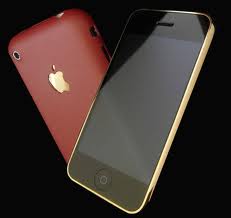
iPhone 6

The 3.5 mm TRRS connector for the headphones is located on the top left corner of the device. The headphone socket on the original iPhone is recessed into the casing, making it incompatible with most headsets without the use of an adapter.Subsequent generations eliminated the issue by using a flush-mounted headphone socket. Cars equipped with an auxiliary jack allow for handsfree use of the iPhone while driving as a substitute for Bluetooth.
While the iPhone is compatible with normal headphones, Apple provides a headset with additional functionality. A multipurpose button near the microphone can be used to play or pause music, skip tracks, and answer or end phone calls without touching the iPhone. A small number of third-party headsets specifically designed for the iPhone also include the microphone and control button.The current headsets also provide volume controls, which are only compatible with more recent models.These features are achieved by a fourth ring in the audio jack that carries this extra information.
The built-in Bluetooth 2.x+EDR supports wireless earpieces and headphones, which requires the HSP profile. Stereo audio was added in the 3.0 update for hardware that supports A2DP.While non-sanctioned third-party solutions exist, the iPhone does not officially support the OBEX file transfer protocol. The lack of these profiles prevents iPhone users from exchanging multimedia files, such as pictures, music and videos, with other bluetooth-enabled cell phones.

Composite or component video at up to 576i and stereo audio can be output from the dock connector using an adapter sold by Apple.iPhone 4 also supports 1024x768 VGA output via a dock adapter. The iPhone did not support voice recording until the 3.0 software update.

Monday, May 16, 2011

iPhone 5

The display responds to three sensors (four on the iPhone 4). A proximity sensor deactivates the display and touchscreen when the device is brought near the face during a call. This is done to save battery power and to prevent inadvertent inputs from the user's face and ears. An ambient light sensor adjusts the display brightness which in turn saves battery power. A 3-axis accelerometer senses the orientation of the phone and changes the screen accordingly, allowing the user to easily switch between portrait and landscape mode.Photo browsing, web browsing, and music playing support both upright and left or right widescreen orientations.Unlike the iPad, the iPhone does not rotate the screen when turned upside-down, with the Home button above the screen, unless the running program has been specifically designed to do so. The 3.0 update added landscape support for still other applications, such as email, and introduced shaking the unit as a form of input.The accelerometer can also be used to control third-party apps, notably games. The iPhone 4 also includes a gyroscopic sensor, enhancing its perception of how it is moved.

A software update in January 2008allowed the first-generation iPhone to use cell tower and Wi-Fi network locations trilateration,despite lacking GPS hardware. The iPhone 3G, 3GS and 4 employ A-GPS, and the iPhone 3GS and 4 also have a digital compass.

Audio and output
One of two speakers (left) and the microphone (right) surround the dock connector on the base of the original iPhone. If a headset is plugged in, sound is played through it instead.

The bottom of the iPhone sports a speaker (left) and a microphone (right) flanking the dock connector. One loudspeaker is located above the screen as an earpiece, and another is located on the left side of the bottom of the unit, opposite a microphone on the bottom-right. The iPhone 4 includes an additional microphone at the top of the unit for noise cancellation, and switches the placement of the microphone and speaker on the base on the unit—the speaker is on the left.Volume controls are located on the left side of all iPhone models and as a slider in the iPod application.

Wednesday, May 11, 2011

iPhone 4

Screen and input
The touchscreen is a 9 cm (3.5 in) liquid crystal display with scratch-resistant glass.The capacitive touchscreen is designed for a bare finger, or multiple fingers for multi-touch sensing. The screens on the first three generations have a resolution of 320 x 480 (HVGA) at 163 ppi, while that of iPhone 4 has a resolution of 640 x 960 at 326 ppi.

The touch and gesture features of the iPhone are based on technology originally developed by FingerWorks.Most gloves and styluses prevent the necessary electrical conductivity; however, capacitive styli can be used with iPhone's finger-touch screen. The iPhone 3GS and later also feature a fingerprint-resistant oleophobic coating.

The iPhone has a minimal hardware user interface, featuring only four or five buttons, depending on the generation. The only physical menu button is situated directly below the display, and is called the "Home button" because it closes the active app and navigates to the home screen of the interface. The home button is denoted not by a house, as on many other similar devices, but a rounded square, reminiscent of the shape of icons on the home screen. A multifunction sleep/wake button is located on the top of the device. It serves as the unit's power button, and also controls phone calls. When a call is received, pressing the sleep/wake button once silences the ringtone, and when pressed twice transfers the call to voicemail. Situated on the left spine are the volume adjustment controls. The iPhone 4 has two separate circular buttons to increase and decrease the volume; all earlier models house two switches under a single plastic panel, known as a rocker switch, which could reasonably be counted as either one or two buttons. Directly above the volume controls is a silence switch that mutes all sound when engaged. All buttons except Home were made of plastic on the original iPhone and metal on all later models. The touchscreen furnishes the remainder of the user interface.

Saturday, May 7, 2011

iPhone 3

Apple sold 6.1 million original iPhone units over five quarters.Recorded sales have been growing steadily thereafter, and by the end of fiscal year 2010, a total of 73.5 million iPhones were sold.By 2010/2011, the iPhone has a market share of barely 4% of all cellphones, but Apple still pulls in more than 50% of the total profit that global cellphone sales generate.Sales in Q4 2008 surpassed temporarily those of RIM's BlackBerry sales of 5.2 million units, which made Apple briefly the third largest mobile phone manufacturer by revenue, after Nokia and Samsung.Approximately 6.4 million iPhones are active in the U.S. alone.While iPhone sales constitute a significant portion of Apple's revenue, some of this income is deferred.

The back of the original iPhone was made of aluminum with a black plastic accent. The iPhone 3G and 3GS feature a full plastic back to increase the strength of the GSM signal.The iPhone 3G was available in an 8 GB black model, or a black or white option for the 16 GB model. They both are now discontinued. The iPhone 3GS was available in both colors, regardless of storage capacity. The white model was discontinued in favor of a black 8 GB low-end model. The iPhone 4 has an aluminosilicate glass front and back with a stainless steel edge that serves as the antennae. It is available in black; a white version was announced, but has as of March 2011not been released.

The iPhone has garnered positive reviews from critics like David Pogue and Walter Mossberg.The iPhone attracts users of all ages,and, besides consumer use, the iPhone has also been adopted for business purposes.

On January 11, 2011, Verizon announced during a media event that it had reached an agreement with Apple and would begin selling a CDMA2000 iPhone 4. Verizon said it would be available for pre-order on February 3, with a release set for February 10. In Feb 2011, the Verizon iPhone accounted for 4.5 percent of all iPhone ad impressions in the U.S. on Millennial Media’s mobile ad network.

On March 2, 2011, at the iPad 2 event, Apple announced that they have sold 100 million iPhones.

Tuesday, May 3, 2011

iPhone 2

History and availability
Development of the iPhone began in 2005 with Apple CEO Steve Jobs' direction that Apple engineers investigate touchscreens.He also steered the original focus away from a tablet, like the iPad, and towards a phone.Apple created the device during a secretive and unprecedented collaboration with AT&T Mobility—Cingular Wireless at the time—at an estimated development cost of US$150 million over thirty months.Apple rejected the "design by committee" approach that had yielded the Motorola ROKR E1, a largely unsuccessful collaboration with Motorola. Instead, Cingular gave Apple the liberty to develop the iPhone's hardware and software in-house in exchange for exclusive U.S. sales until 2011.

Jobs unveiled the iPhone to the public on January 9, 2007 at Macworld 2007. Apple was required to file for operating permits with the FCC, but since such filings are made available to the public, the announcement came months before the iPhone had received approval. The iPhone went on sale in the United States on June 29, 2007, at 6:00 pm local time, while hundreds of customers lined up outside the stores nationwide.The original iPhone was made available in the UK, France, and Germany in November 2007, and Ireland and Austria in the spring of 2008.

On July 11, 2008, Apple released the iPhone 3G in twenty-two countries, including the original six.Apple released the iPhone 3G in upwards of eighty countries and territories.Apple announced the iPhone 3GS on June 8, 2009, along with plans to release it later in June, July, and August, starting with the U.S., Canada and major European countries on June 19. Many would-be users objected to the iPhone's cost,and 40% of users have household incomes over US$100,000.In an attempt to gain a wider market, Apple retained the 8 GB iPhone 3G at a lower price point. When Apple introduced the iPhone 4, the 3GS became the less expensive model. Apple reduced the price several times since the iPhone's release in 2007, at which time an 8 GB iPhone sold for $599. An iPhone 3GS with the same capacity now costs $49. However, these numbers are misleading, since all iPhone units sold through AT&T require a two-year contract (costing several hundred dollars), and a SIM lock.

Thursday, April 28, 2011

iPhone 1

iPhone
The iPhone (pronounced /ˈaɪfoʊn/ EYE-fohn) is a line of Internet and multimedia-enabled smartphones designed and marketed by Apple Inc. The first iPhone was unveiled on January 9, 2007,and released on June 29, 2007. Steve Jobs, head of Apple announced iPhone to the world in San Francisco, California at the Moscone Center.

An iPhone can function as a video camera, camera phone with text messaging and visual voicemail, a portable media player, and an Internet client with e-mail, web browsing, and both Wi-Fi and 3G connectivity. The user interface is built around the device's multi-touch screen, including a virtual keyboard rather than a physical one. Third-party as well as Apple applications are available from the App Store, which launched in mid-2008 and now has well over 300,000 "apps" approved by Apple. These apps have diverse functionalities, including games, reference, GPS navigation, social networking, security and advertising for television shows, films, and celebrities.
There are four generations of iPhone models, and they were accompanied by four major releases of iOS (formerly iPhone OS). The original iPhone was a GSM phone that established design precedents like screen size and button placement that have persisted through all models. The iPhone 3G added 3G cellular network capabilities and A-GPS location. The iPhone 3GS added a compass, faster processor, and higher resolution camera, including video. The iPhone 4 has two cameras for FaceTime video calling and a higher-resolution display. It was released on June 24, 2010. On January 11, 2011, Apple and Verizon together launched a CDMA2000 compatible iPhone 4 specifically for the Verizon network in the US, released on February 10, 2011.

Monday, April 25, 2011

Personal digital assistant 8

Recreational uses
PDAs may be used by music enthusiasts to play a variety of music file formats. Many PDAs include the functionality of an MP3 player.

Road rally enthusiasts can use PDAs to calculate distance, speed, and time. This information may be used for navigation, or the PDA's GPS functions can be used for navigation.
Underwater divers can use PDAs to plan breathing gas mixtures and decompression schedules using software such as "V-Planner."

PDAs for people with disabilities
PDAs offer varying degrees of accessibility  for people with differing abilities, based on the particular device and service. People with vision, hearing, mobility, or speech impairments may be able to use PDAs on a limited basis. This use may be enhanced by accessibility software (e.g., speech recognition for verbal input instead of manual input). Universal design is relevant to PDAs as well as other technology, and a viable solution for many user-access issues, though it has yet to be consistently integrated into the design of popular consumer PDA devices.

PDAs are useful for people with traumatic brain injury or posttraumatic stress disorder, as seen in troops returning home from the Iraq War and Operation Enduring Freedom. PDAs help address memory problems, helping affected people with daily life organization and reminders. As of quite recently, the Department of Veterans' Affairs has issued thousands of PDAs to troops who need them. Occupational therapists have taken on a crucial role within this population helping these veterans return to the normality of life they once had.